 Polina Cupcea
War is not something completely foreign to me. In recent years, I’ve been to Ukraine several times and have crossed paths with it in various ways.
Through the checkpoints at the entrances to some towns, through the pickup trucks with machine guns that passed me by, through the wail of sirens that I sometimes had to sleep through.
Through the kiosks where, alongside the soldiers, I was buying coffee or cigarettes; through the cemeteries filled with flags fluttering heavily over the fresh graves; through the grief of the mothers who lost their children on the front lines.
Through the eyes of weary people, through veterans’ prosthetics, through barricaded windows, through photographs of the dead plastered all over the cities.
And yet, none of this compares to the night of May 13–14, when Ukraine was subjected to „one of the most massive attacks since the start of the Russian invasion”.
That night, when Russia used „all available means” —from cruise and ballistic missiles to attack drones and unmanned jet aircraft—I was right in the centre of Kyiv. And, for the first time, I felt that death was no longer a distant concept, but something that could come through the window at any moment, along with the explosions.
That night, I realized just how fragile life becomes when the front line is no longer a point on a map, but a reality that shatters your walls, your sleep, and your mind.
***
We are a group of journalists from Moldova, Georgia, and Armenia on a study visit to Ukraine that began right as the several-day ceasefire requested by Moscow for the May 9 celebrations came to an end.
We’re traveling from Odessa to Kyiv aboard a white minibus. During the nearly six-hour drive, my colleagues talk passionately about the war. The most experienced participants are, of course, the organizers—Ukrainian journalists who share their sad and frightening experiences. The conversations are sometimes punctuated by songs like „Putin **ilo” or „Ruskii voennyi korabl’”, and at other times—by gentle stories about family and home.
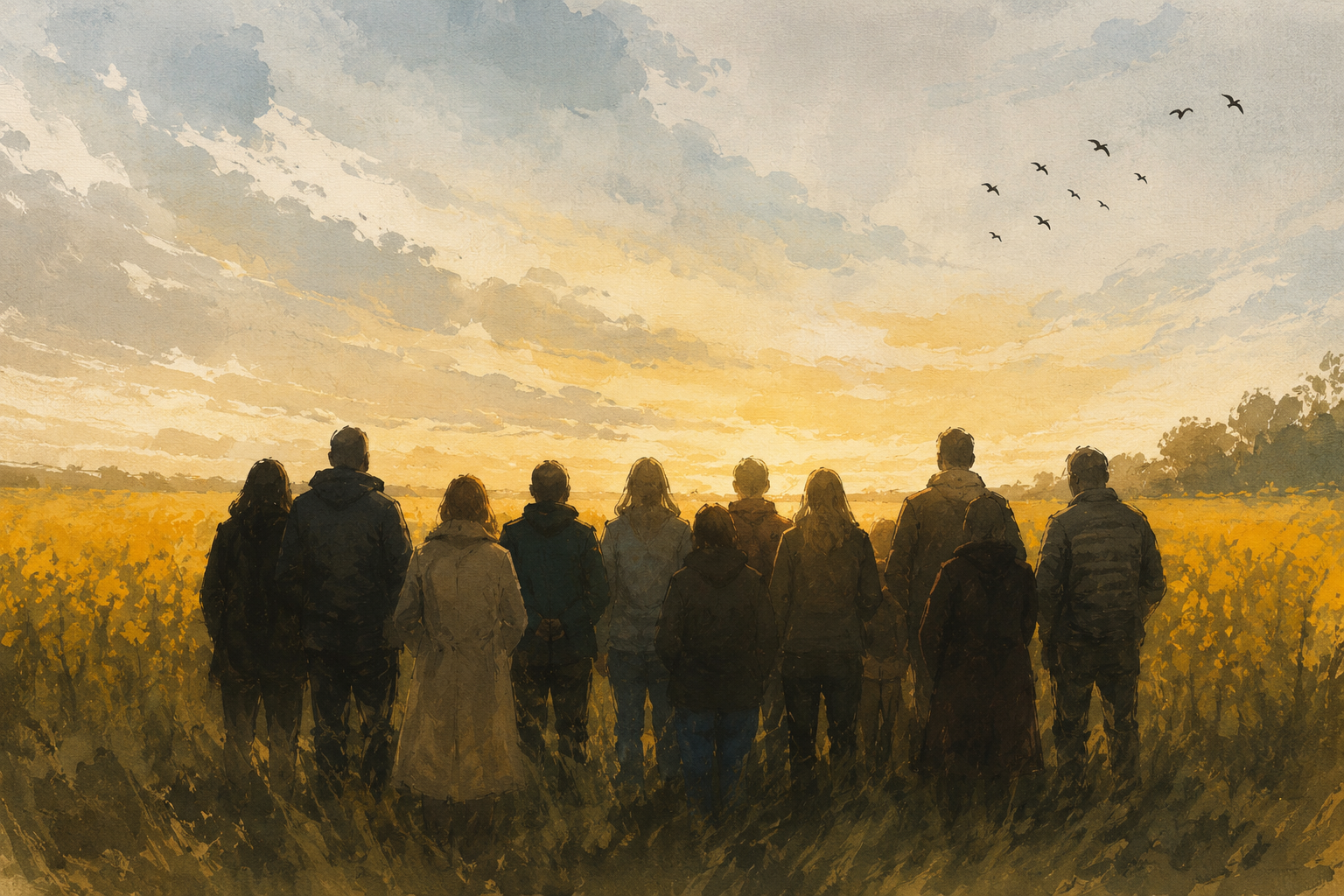
At one point, we stop in a field of rapeseed, which yellow seems to tickle the leaden sky. We shout “Glory to Ukraine!” instead of the English “cheese,” capturing ourselves in a few photos against the almost symbolic backdrop of war and resistance.
Kiyv welcomes us around 10 p.m., with brightly lit streets, imposing buildings, and banners about the war. It’s a city whose beauty I discovered back in 2016, when I came for a few days to see a concert by the band Scorpions. I would find that same city again ten years later: charming, lively, and majestic.
And as I quietly contemplated the splendour of the architecture and the people going about their evenings as usual on the boulevards or in the cafés, I had no idea that, in less than 24 hours, that same city would be pulling bodies from the rubble and mourning its dead.
***
An alarm from a Ukrainian app on my phone jolts me awake. It warns you well in advance that Russian drones and missiles are about to pierce the sky and that you need to take cover in the nearest air-raid shelter.
I look at the alert as the piercing sound of the sirens outside aggressively penetrates the room. It’s almost 1 a.m. I try to ignore it. After all, I had already heard so many sirens—some shrill, others more ominous, with deepened voices or, on the contrary, almost squeaky…
I had first encountered them in the early months of the full-scale Russian invasion, when I was in the Odessa region documenting the lives of local Ukrainians with Bessarabian roots. Although, out of self-preservation, I should have at least followed the “rule of the two walls,” I ignored them when they screamed.
But at the time, the war seemed like something that happened mainly to others—the people we were interviewing, the people who were burying their relatives, the people who were fleeing their homes, or who were watching their cities torn apart by bombing. I was just walking through it, with my voice recorder and camera in hand, under the illusion that the distance would protect me.
The sirens had been wailing since daybreak from the loudspeakers scattered throughout Kyiv, flashing across the city from one end to the other. And yet, the mothers continued to walk calmly alongside their children on scooters, carrying bulging shopping bags in their hands and moving at a leisurely pace, without even stepping aside from the middle of the pedestrian streets.
So, after this nearly fruitless experience with the alarms I’d heard up to that point, I lie in bed and wonder: What are the odds that something will happen to me on this very May night, with the chestnut trees in bloom and the stars faintly twinkling in the sky?
No matter how many times I’ve been to Ukraine, I’ve never thought of death as something imminent or even very likely. I’ve never considered it an important part of my toolkit. Not when we crossed the border at Serpneve, nor at Tudora, nor at Palanca. Perhaps it was also because the front always seemed to be somewhere far away, a few hundred kilometres away, like a muffled sound that never reaches you.
I’m lying in bed, and I’m overcome by worries that won’t let me fall asleep peacefully. The words of Ukrainian President Volodymyr Zelenskyy are swirling through my mind; he had warned earlier that day that everyone must be prepared that night, because the Russians would launch a major attack. After the nearly 900 drones launched during the day—which resulted in several deaths and dozens of injuries—missiles were to follow.
My sister’s words also come to mind—she looked at me with a tense expression when I told her I was leaving for seven days in Ukraine. It was the first time I’d seen her get so worked up over me. “You’ll set out right after May 9, when the Russians will attack mercilessly—especially after the defeat and humiliation Zelenskyy inflicted on Putin with the presidential decree that allowed them to celebrate Victory Day. Well, not that they’d be any gentler on other occasions, but still…,” she told me bluntly.
For situations like this, I always have the same response ready: “The Ukrainians have been fighting a full-scale war for four years and three months.” “So, I have no right to whine or be a coward.” It’s just that, for the first time since I’ve been in Ukraine, my own words don’t even convince me.
Still, I close my eyes and try to get a few more hours of sleep. But I can feel my heartbeat quickening as the sirens wail outside. My breathing changes, too: it becomes faster, shallower, and more erratic, as if my body senses the danger before my mind does. I press the “ignore” button—both for the sirens and for the emotions that are knocking ever more insistently at my door.
I gaze into the thick darkness of the room, and a sailor’s knot tightens around my throat. All I do is turn to the other side, facing the wall and with my back to the window, as if simply turning my body away could protect me from what’s happening outside.
“If the windows are going to shatter, at least let them cut my back, not my face,” I tell myself in an absurd, almost mechanical thought.
I’m dozing off.
***
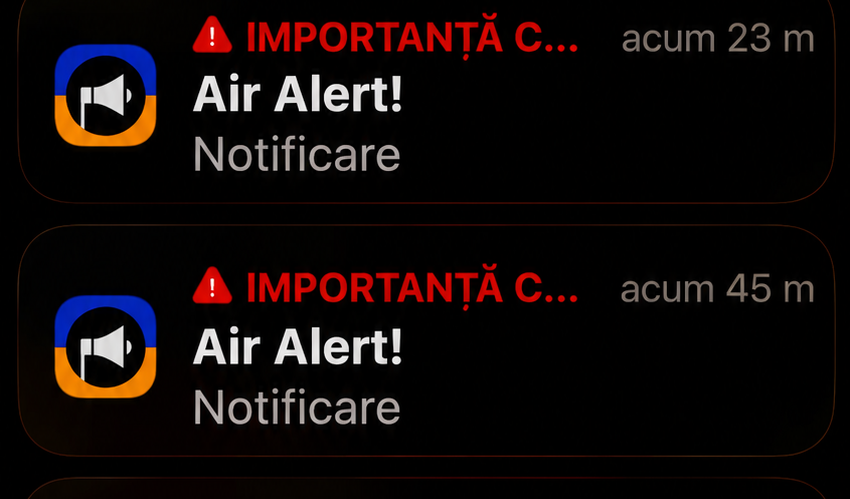
It’s 1:20 a.m., and the alarm jolts me awake again. I’m looking at my phone screen. The previous alert is still in effect, and the app is notifying me of a new air threat and that I need to head to the nearest shelter. I’m confused. “Is it even possible to get another alert when the first one isn’t even finished yet?!”
I’m as stubborn as a mule and refuse to get out of bed. It’s not that I’m too lazy to grab my little yellow bag—which holds my entire identity: my ID, money, and a power bank—put on my raincoat and boots, and head down to the hotel shelter, but because the stories I’ve heard throughout the day are still on my mind.
A woman from Mariupol had told me, almost matter-of-factly, that she no longer goes down to the shelter when the sirens go off, and a Ukrainian soldier had shrugged as well: “I don’t hide.” And perhaps, in some absurd and unconscious way, some of their weary calm had rubbed off on me as well. As a kind of silent solidarity with the people who have been living through nights like this for years. Or maybe it’s just a silly illusion that, if they’ve held out this long, then I, too, can put up with a few sirens on a May night.
“Relax—you’ve heard those warning signs so many times, you’ve always ignored them, and nothing’s ever happened to you. “The chances are slim that it will take on a different form tonight of all nights.”
I close my eyes, take a deep breath, and drift off to sleep again.
***
It’s 1:55, and the alarm is going off for the third time. The doors to the neighbours’ rooms slam shut, and against the backdrop of the sirens, I hear heavy, hurried footsteps rustling through the hallways. Their sound seems more unsettling than the alarm itself. These are the footsteps of people who no longer take any chances with danger but instinctively head down to the basement.
I look at my phone screen, and I don’t understand anything anymore. “It’s only been a few minutes, and they’re sending alerts again? In such a short time? Every 10 to 15 minutes? “What on earth is going on?”
My reasoning is simple and childish: you send an alert, it takes half an hour at most, and that’s it. Then, a few hours later, you send another one, and another one a few days later. That’s pretty much what used to happen to me whenever I stopped by Ukraine: rare, scattered, almost abstract sirens. Not something that screams nonstop and keeps you from falling asleep.
I grit my teeth and roll onto one side, then the other; I scrunch up the comforter and pull it tight against my chest, but I don’t move from the bed. “I’m not going down to the basement.” I reassure myself with the thought that this might be the last alarm, and that those who are now in the shelter will only regret that they didn’t rest in bed but instead dozed off in chairs or lay sprawled on the floor, uncomfortable, with their eyes glued to their phones and their ears pricked up for the sirens.
Still, my racing heartbeat, along with my ragged breathing and the knot in my stomach, won’t go away. On the contrary. It’s as if everything is rising, like a wave that hasn’t broken yet, but that you can feel coming straight at you.
Scattered and disjointed thoughts intertwine—sometimes with the sweet whispers of sleep, sometimes with the sirens howling like jackals on Walpurgis nights under a full moon. Between sleep and fear, the mind begins to slip into a kind of thick fog, where even logic no longer functions clearly. And I’m starting to have my doubts.
The phone screen is filled with red notifications and the yellow-and-blue megaphone icon, which keeps sending alerts nonstop. I am completely bewildered—both by the fitful sleep interrupted by the wail of sirens and by the fear that, little by little, settles deeper and deeper within me, like a fawn hidden in the thick, lush grass, afraid the hunter will find it. Except that, on that night, the hunter was no longer a metaphor. It flew somewhere above Kyiv, in the darkness, scattering death.
A thought that had been smouldering all day suddenly struck me—a thought I had forcibly locked away in the prison of ignorance that very morning, when Kiev had been engulfed by incessant alarms: what if tonight there’s more to it than just sirens? I shoo it away and go to bed, my eyelids as heavy as lead, pulling the sheet even tighter around my chest, as if that thin piece of fabric could keep the war at bay.
It’s really stormy out there. I’m feeling a lot of turmoil inside, too. The city is already awake, and my mind can’t seem to fully settle down either.
2:00 a.m. – The alarm blares, the sirens go wild.
2:20 a.m. – The alarm blares; sirens tear through Kyiv like a beast.
2:35 a.m. – The alarm blares; the sirens seem like they’ll never stop.
2:47 a.m. – …
***
All hell breaks loose. I can feel it opening its black, terrifying maw over Kiyv. And I feel, so clearly, that I have no power to defeat it. I’m lying in bed, paralyzed. My whole body goes limp; it feels like a rag, as if an invisible force were putting me through a meat grinder.
Fear strikes me with the same brutality with which missiles strike Ukraine and wipe people, homes, and entire lives off the face of the earth. It shatters me into a thousand pieces. I’m all curled up. There is no longer any false armour of courage, no triumphant rhetoric, and no romantic solidarity with war. There is only the raw instinct of a person who realizes that death can come for them.
The inevitable has happened.
Outside, the sirens are accompanied by heavy, deafening gunfire. Blasts, booms, roars, explosions. Everything is crackling. The walls seem to breathe in time with the bombardment, and the air itself vibrates as if a collapse were imminent.
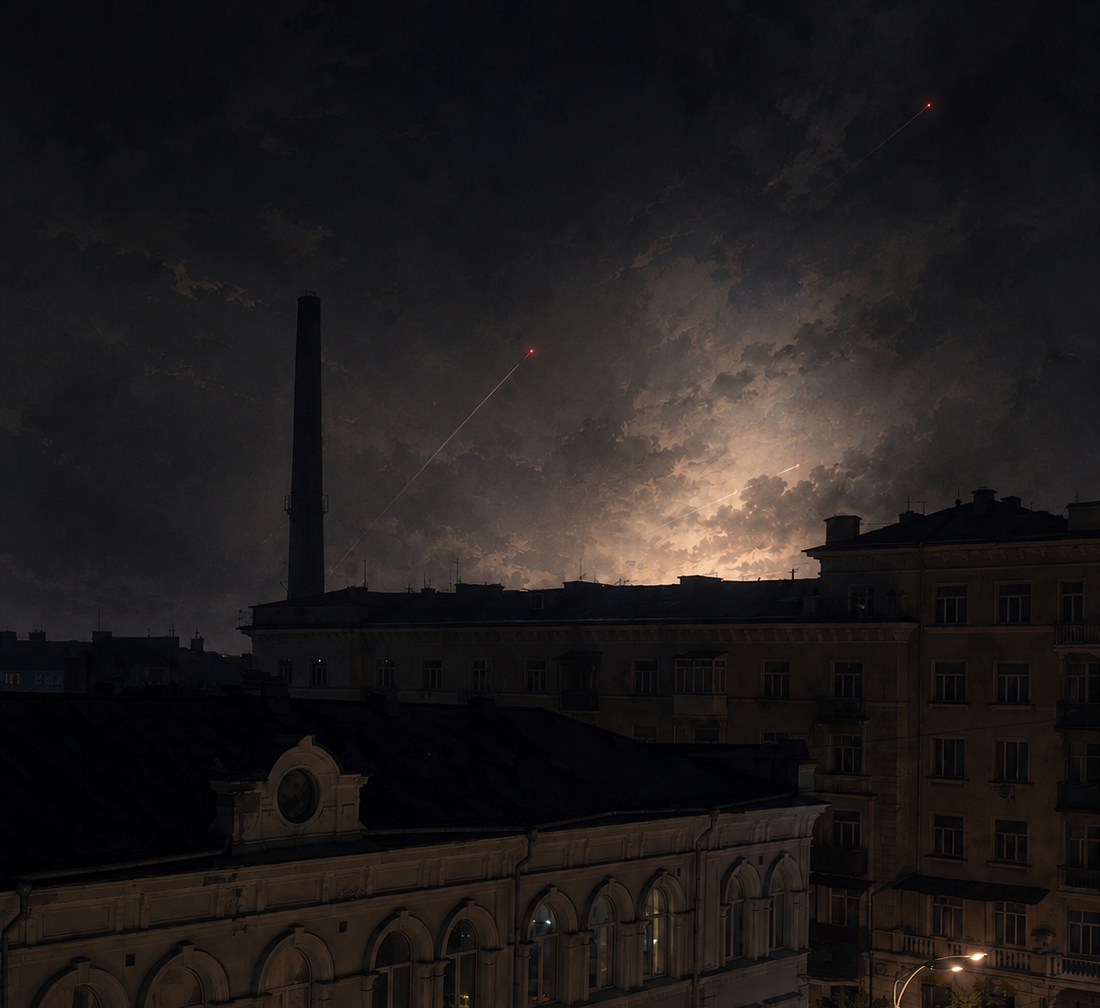
Russian missiles tear through the night and turn it into day. Through the window, I see how the sky has turned pale, and the stars have retreated, frightened by the madness that has been unleashed, giving way to deafening and fierce battles. It was as if the entire city had been swallowed up by an abyss that spewed fire, explosions, and death.
Everything seems so brutal, savage, and violent that I get the impression the front line is right next to the hotel where I’m staying. I’m scared. I never imagined that war would feel exactly like this for Ukrainians—suffocating. Not just through death, but through the way it enters your body, takes over your hearing, your breathing, and your thoughts, until there’s no room left for anything else.
I find myself thinking that if everything already seems overwhelming to me—even though I have the option of taking shelter in a basement and, a few kilometres away, I’m protected by Ukrainian soldiers who shoot down drones and missiles—then what must it be like for the young people on the front lines who have none of these things and who are their own defenders? What is it like to sleep for months and years on end with death clinging to your skin and the sky turning, night after night, into a rabid beast?
“If they can do it, so can I.”
I jump out of bed. I walk over to the window and open it. My blood runs cold. War hits me right in the face. I don’t hear it anymore—not through the walls, not on the news, and not in other people’s stories. I can sense it—alive, ferocious, and rampaging—a few hundred meters away from me.
I watch the red lights streaking across the sky and, almost without thinking, raise my phone toward them. It’s as if demons were dancing in the sky, caught up in a funeral rite of war. Booms and explosions roll violently across the city, shaking it to its very foundations. The windows are shaking.
I’m closing the window. My heart is pounding louder than the explosions outside. I’m shaking all over. At times like these, everything that had seemed important until then fades away. With my boots in one hand and my purse in the other, I walk out of the room.
***
I have to walk all the way down the hallway to get to the stairs, because you’re not allowed to use the elevator. I can’t even take a few steps before the entire building begins to shake at its very foundations, and the windows rattle furiously. I freeze. I can feel panic setting in, and all this fear is making me dizzy. I feel nauseous. I want to cry, but a thought suddenly stops me in my tracks: hide behind a few walls.
Beyond my room is another hallway, narrower and set back from the hotel’s main corridor. I run quickly toward it and press myself against the wall, as if that cold concrete could suddenly become a shield against war. I feel so helpless, and I’m amazed at how small I’ve become in just a few minutes. So small, as if I were the same age as my seven-year-old daughter, who buries her nose in my chest at night when she has a bad dream. It’s just that I have nowhere to hide my fear except by burying my face in the hotel’s concrete walls.
I’m overcome with tears as the booms engulf the building and continue to shake it, slamming into it with force. The windows rattle like teeth chattering in the cold. Outside, there’s gunfire as if the front lines had reached the centre of Kyiv. I want someone to be by my side, to take my hand and tell me that everything will be all right, because I don’t feel safe behind these few walls. I understand with almost brutal clarity that if a rocket strikes the building directly, none of us will survive.
I’m pressed up against the wall, my mind in disarray, my stomach in knots, and my heart torn apart by fear, just as the sky is torn apart by Russian missiles. An earthquake lasts a few seconds. In Kyiv, the upheaval of war lasts for tens of minutes, during which the explosions and gunfire never cease and overwhelm your mind until you can no longer tell where the noise outside ends and the noise inside you begins.
I steel myself to head toward the stairs, and at that very moment, Kyiv is engulfed by a new wave of booms and explosions. I freeze. My hair gets all tangled up. Despair overwhelms me and completely drains my energy. One thought is tearing at my mind: the story of the Bristol Hotel in Odessa, which was struck directly by a missile. That image weighs heavily on my mind, and for the first time, I think of death as something inevitable.
You feel it differently at times like these. That vague possibility—the one you were telling yourself about just a few hours ago—is starting to fade away and turn into something real. Suddenly, death no longer seems impossible. It actually becomes possible. And maybe it’s precisely then, when you feel it so close, that something strange happens.
In the midst of this hell, the will to live is reborn with such uncontrollable intensity that it leaves me perplexed. Amid the explosions and the panic that’s tearing me apart from the inside, all I want is to live, to see the dawn, to see my family again, and to hold my child in my arms.
I take a deep breath and, staggering like a drunk, run toward the stairs. For the past few months, my knee has been bothering me, and it hurts if I put too much strain on it—even when I go up or down a few steps—but now I don’t feel anything anymore. Neither pain nor fatigue. Just that primal drive to survive. Amid the devilish trills of the explosions outside, I run down the stairs from the fifth floor with the same urgency with which Russian missiles seem to be falling on Kyiv and find myself on the ground floor.
Not a soul. The reception area is deserted. The cold light falls across the counter and the abandoned computers, as if everyone had suddenly vanished from the building. I’m heading to the shelter. I walk past the guard, whose monitor displays a map of Ukraine crisscrossed with red lines, all pointing toward Kyiv. That view takes my breath away even more than the explosions. The city seems to be surrounded on all sides.
He sees me and says briefly, in Ukrainian, “Parking.” He opens the door for me, and suddenly I’m outside. Outside, where hell is in full swing. I see some stairs and instinctively head toward them, but he calls out to me from behind and frantically gestures for me to run faster toward the parking lot. I’m confused and scared. I don’t understand where the heck that parking lot is. And I feel like howling with helplessness. This heartbreaking moment is sapping me of the little strength I’ve managed to muster with such difficulty in the last few minutes.
A crack so loud—even from about five meters away—that it freezes me in my tracks for a few milliseconds. My heart leaps in my chest, just as dirt leaps up when a grenade explodes. And that’s when I realize just how fantastic and brutal the struggle between fear and the will to survive is.
In my mind, even though everything is a jumble of noises, explosions, and panic, I realize that someone has slammed the parking lot door. I head toward the noise, and a few men who are smoking nervously come into view ahead of me. I walk past them, open the door, and finally find myself inside the shelter.
***
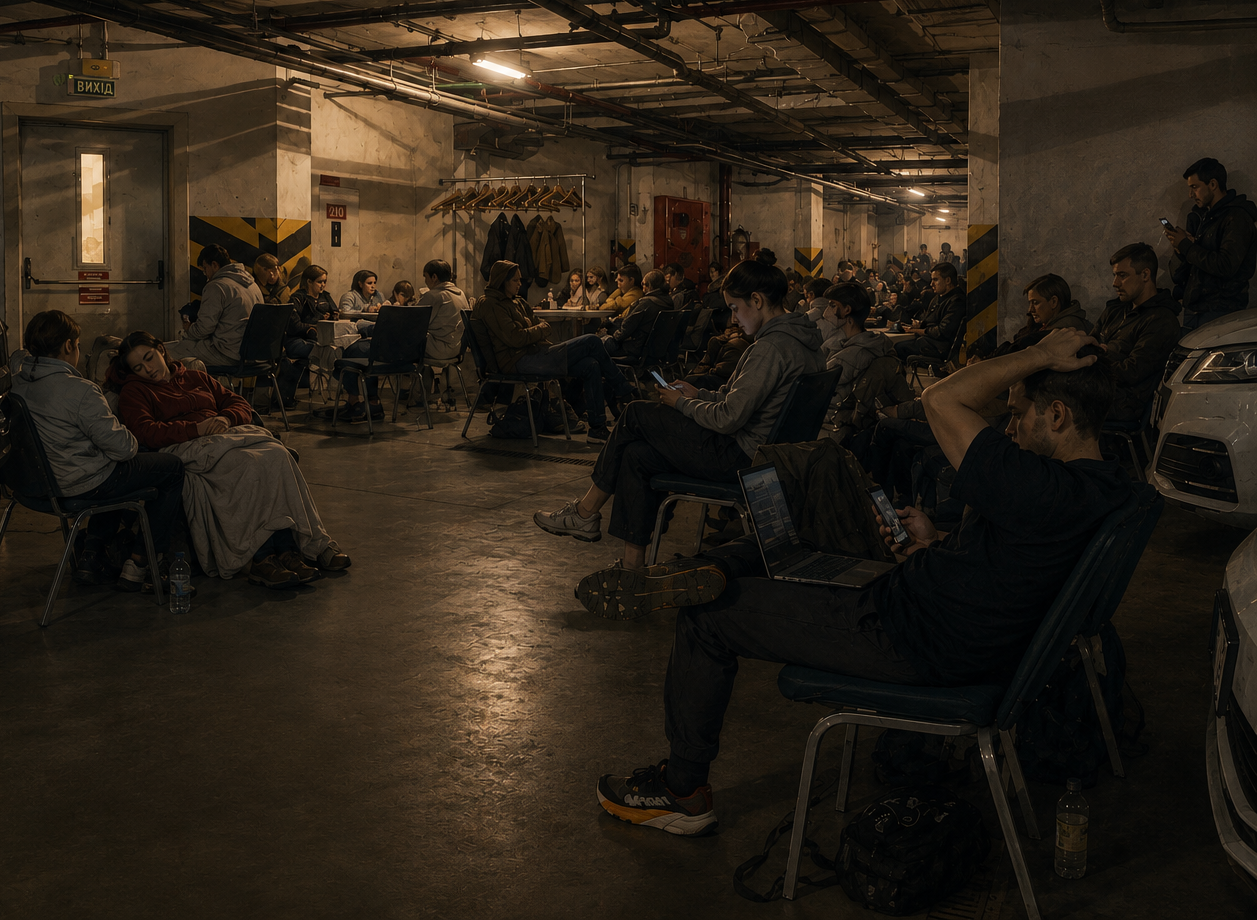
It’s quieter in the hotel parking lot, but even here, through the thick concrete walls, the echoes of explosions and gunfire can be heard. I run into a colleague of mine from Moldova, who helps me find a seat. There are dozens of us gathered there, each with a phone in hand or staring blankly into space. I wonder if they’re also afraid. My colleague confirms this.
We try to chase away our fear with jokes, to make it smaller, more bearable, but no matter how much we lie to ourselves, we always end up back in the hell from which it seems we’ll never escape. My colleague keeps reading from his phone: “Twenty-five are coming.” Ten are coming.” Each new wave of missiles comes crashing down on us like a tornado that seems as if it’s about to swallow us whole.
And that’s when the mind starts to conjure up monstrously bookkeeping-like thoughts. “If a rocket hits the hotel, we won’t make it out from under the rubble. This parking lot most likely won’t save us. We’ll be buried alive under chunks of concrete.” And that thought terrifies me even more than the explosion itself. Not the fear of a sudden death, but the possibility of a slow, agonizing death in the dark, surrounded by people who will cry out for help and whom no one will be able to rescue in time. And, absurdly, I find myself wondering if it wouldn’t have been better to have stayed in the room.
We remain in this tense situation for nearly two hours. Some on chairs, some on mats, some in cars. Some speak softly, others remain silent, and still others peek out through the half-open door and watch the sky, which crackles and glows white every time a missile is shot down. And time seems to stand still between the next alarm and the next explosion.
Fatigue is starting to overwhelm me more and more. I want to sleep, but my brain is bombarding me with a new wave of thoughts. I realize that fear takes many forms: fear of poverty, of abandonment, of loneliness. And there is a particular fear—one that, until then, I had only observed from the outside—the fear of war. A terrifying fear.
As the building continues to shake slightly with every explosion, and I wonder if I’ll make it out of this night alive, another wave of strange thoughts begins to wash over me: thoughts about death, about life, about war.
I think death has its natural place on earth. That people should pass away in old age, one by one, as is the way of this world. It’s just that we, as humans, distort its purpose, because in war, death takes on our likeness: greedy, insatiable, corrupted by so much power.
And I see it everywhere: in the names written on the license plates of military vehicles, among the luxury cars and buses full of soldiers heading to the front. I see it standing at the same gas station with you, drinking its coffee next to you, sitting on trains, in train stations, in hospitals, and on the phones of people waiting for a message that may never come.
And that’s when Bertolt Brecht’s play „Mutter Courage” comes to mind. It’s about a widow who sees war as a source of profit but ends up losing her children because of the conflict. In my graduation performance at the Academy of Arts, I played the lead role in this play, and now I wonder if it was just a coincidence or not.
Back then, I knew about war only from what I’d read, from lines like “Cursed be war!”, from metaphors, and from scenes reenacted under the spotlight. But now, in an underground parking garage in downtown Kyiv, “Cursed be war!” is no longer just a line spoken on stage, but the suffocating leitmotif of a night that seems to go on forever.
And how different the theatre stage is from the battlefield. Back then, I thought I was portraying fear, despair, and pain, but it’s only now that I realize how little I actually understood about them. And that, if I ever had the chance again to take the stage as that crazy woman, I would play the role completely differently.
***
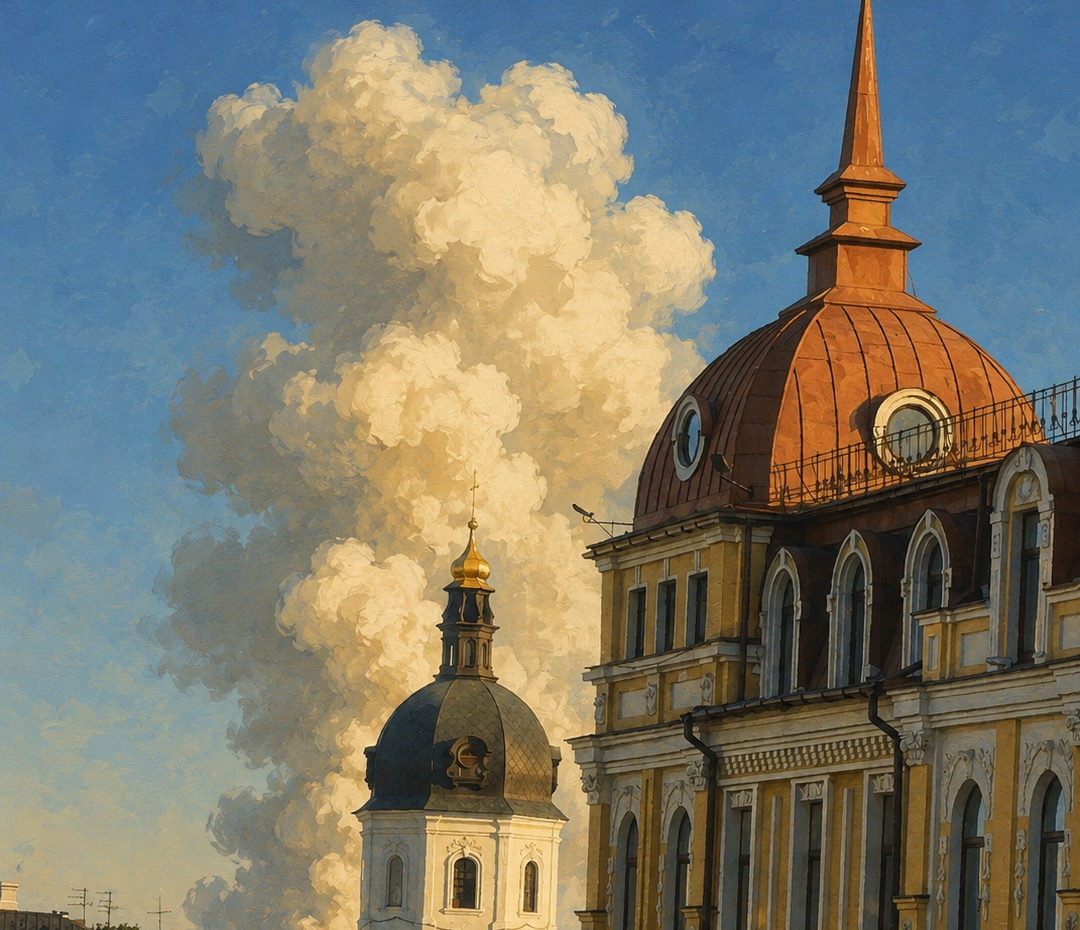 Amid all these jumbled thoughts, I notice some people in the parking lot heading toward the exit. Outside, dawn is breaking, and it has grown quiet. An almost unnatural silence after so many hours of hell. And my heart leaps with joy. „I made it through! I survived! I’m alive!”
I dash to the ground floor. The elevators are running again, a sign that the city, at least for a few moments, can breathe freely.
Once in my room, I don’t go to bed. I feverishly start packing my bags. Even though it’s almost five in the morning, sleep won’t come to me, but I won’t let it get close either. All I’m thinking about is managing to pack up my things. If another wave of missiles comes, at least I’ll have everything ready. I’m packing. I’m washing up. I’m getting ready. The whole thing takes about half an hour. I line up my bags by the door, ready to run at a moment’s notice.
I open the window. The chirping of birds drifts in from outside. And then I say to myself, with tears almost in my eyes: “Oh God, peace at last.” I just want to kiss the sky. To kiss God for not forgetting us. And to hug the Ukrainians tightly.
With those emotions still fresh in my mind, I lie down on the bed—fully clothed, of course—hoping to doze off for a bit. There’s still an hour until seven, when I’ll be able to go down to the café to get three strong coffees. I fall asleep peacefully, with the sun’s rays gently caressing me and a little oasis of peace settling over me.
In less than ten minutes, a loud bang jolts me awake. It’s so powerful that it overwhelms me and almost tears my heart in two. Almost instinctively, I walk over to the window, even though I realize the risk is high. From a building just a stone’s throw away, thick, white clouds of smoke rise, while the sound of gunfire rings out.
I’m starting to cry. It’s not out of panic or weakness. But because I understand how fragile peace is in a city at war. And I wonder how the Ukrainians manage to live and hold on in this nightmare, where even hope seems to have been shattered by the bombings.
On the night of May 13–14, the Russian military launched 731 aerial targets at Ukraine, including 56 missiles and 675 drones of various types, according to the Ukrainian Air Force.
In Kyiv, the main target of the attack, 24 people were killed—including three children —and 48 were injured, prompting authorities to declare May 14 a day of mourning.
*Illustrations inspired by real-life images, generated using AI